
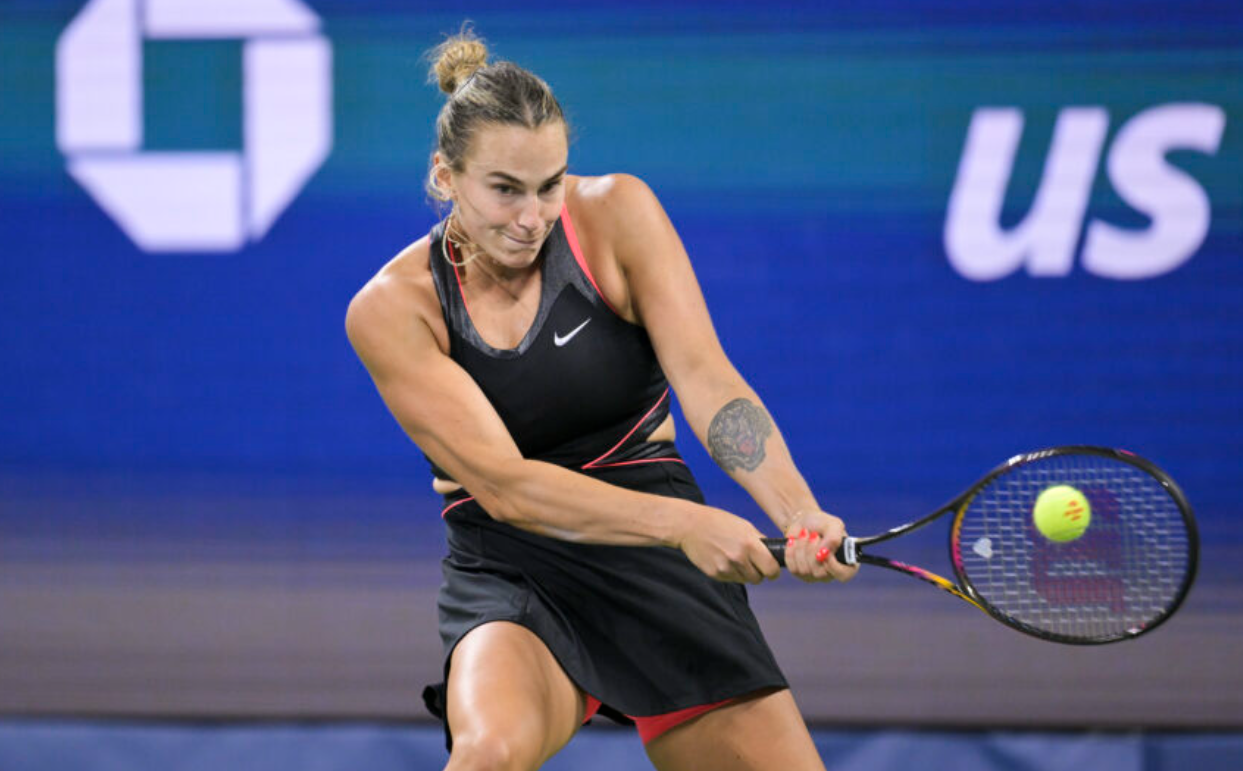
Sabalenka Can Win a Historic US Open Three-Peat—and Still Lose World No. 1
Aryna Sabalenka arrived in New York chasing a piece of US Open history.
Win seven matches, and the two-time defending champion would become only the third woman in the Open Era to win three consecutive US Open singles titles, joining Chris Evert and Serena Williams.
Normally, that would be more than enough drama for one tournament.
But Sabalenka is fighting another battle at the same time—and remarkably, winning the US Open may not be enough to win it.
The World No. 1 ranking she has held for nearly two years is under serious threat from Elena Rybakina.
And the mathematics have created an extraordinary possibility:
Sabalenka could lift the US Open trophy for a third consecutive year and still leave New York having lost the World No. 1 ranking.
Sabalenka Is Chasing Rare US Open History
Sabalenka won the US Open in 2024 and successfully defended the championship in 2025.
A third consecutive title would put her in extremely exclusive company.
Only Chris Evert and Serena Williams have completed a women’s singles US Open three-peat during the Open Era.
Many great champions have tried and failed.
Margaret Court, Billie Jean King, Martina Navratilova, Steffi Graf, Monica Seles, Venus Williams and Kim Clijsters all won consecutive US Open titles but were stopped before completing a third.
Sabalenka began her attempt in convincing fashion, defeating Camila Osorio 6–2, 6–4 in the opening round.
But while every victory moves her closer to history, another race is taking place in the background.
The World No. 1 Ranking Is Also on the Line
Sabalenka entered the US Open as World No. 1, followed by Elena Rybakina at No. 2.
Jessica Pegula and Coco Gauff are also mathematically capable of leaving New York at the top of the rankings.
But Rybakina controls the most straightforward path.
If Rybakina reaches the US Open semifinals, she is projected to become World No. 1 regardless of Sabalenka’s result—including if Sabalenka wins the tournament.
That creates one of the strangest potential outcomes of the fortnight.
Sabalenka could walk onto Arthur Ashe Stadium on championship Saturday, win a third consecutive US Open trophy and accomplish something only Evert and Williams have managed in the Open Era.
And when the new WTA rankings are published, Elena Rybakina could be No. 1.
How Can the US Open Champion Lose No. 1?
The explanation lies in how tennis rankings work.
WTA rankings are based on a rolling 52-week system. Players aren’t simply rewarded for what they accomplish at the current tournament; their previous year’s results are effectively being replaced as the calendar moves forward.
That makes defending points crucial.
Sabalenka arrives in New York carrying the maximum possible burden from last year’s tournament because she won it.
She is defending 2,000 ranking points.
Winning the tournament again therefore protects those points rather than producing a huge net gain.
Rybakina has considerably more room to improve on her 2025 US Open result.
The deeper she goes in New York, the more ranking ground she can gain relative to Sabalenka.
That’s why the championship trophy and the World No. 1 ranking can end up in different hands.
Rybakina Controls Her Own Destiny
For Sabalenka, successfully defending No. 1 now depends partly on something she cannot control.
She needs Rybakina to lose before reaching the semifinals.
If that happens, Sabalenka’s own run becomes decisive again.
But if Rybakina reaches the final four, the race is effectively over.
The Kazakh would secure the points required to rise to World No. 1 regardless of how Sabalenka finishes her tournament.
That means tennis fans following Sabalenka’s title defense suddenly have another section of the draw worth watching.
Every Rybakina match matters to Sabalenka.
Pegula and Gauff Are Still in the Race
Rybakina isn’t Sabalenka’s only mathematical challenger.
Jessica Pegula and Coco Gauff also entered the US Open with paths to the top ranking.
Their scenarios are more demanding: each needs a championship run combined with results elsewhere in the draw going her way.
That leaves Rybakina as the most immediate threat.
The current WTA hierarchy begins with:
1. Aryna Sabalenka
2. Elena Rybakina
3. Jessica Pegula
4. Coco Gauff
By the end of the US Open, that order could look very different.
99 Consecutive Weeks at No. 1
Losing the ranking would end a remarkable period of dominance for Sabalenka.
She entered the 2026 US Open having spent 99 consecutive weeks as World No. 1.
That consistency is significant because women’s tennis has often experienced frequent movement at the top during recent seasons.
Sabalenka has instead established a lengthy reign while becoming particularly formidable on hard courts.
New York has been at the center of that success.
She reached the US Open final in each of the previous three editions, winning the last two, and entered this year’s tournament with a 53–5 record at hard-court Grand Slams since the beginning of 2022.
The US Open has become her territory.
Which makes the possibility of losing No. 1 here particularly ironic.
Two Races, One Tournament
From this point forward, Sabalenka’s US Open campaign is really two stories unfolding simultaneously.
The first is straightforward:
Can Aryna Sabalenka win three consecutive US Opens?
Every match she wins brings her closer to joining Evert and Williams.
The second is much less conventional:
Can Sabalenka remain World No. 1?
For that one, winning her own matches isn’t necessarily enough.
She also needs to watch what Rybakina does.
It creates a fascinating dynamic as the tournament progresses.
Sabalenka could reach the quarterfinals while Rybakina remains alive.
Both could reach the semifinals.
And if Rybakina gets there, the ranking question could be settled before Sabalenka’s championship campaign is finished.
A Three-Peat Would Still Be the Bigger Prize
If Sabalenka ultimately has to choose between the two achievements, there probably isn’t much of a choice.
Rankings can be regained.
Grand Slam history cannot be rewritten.
Becoming only the third woman in the Open Era to win three consecutive US Opens would permanently place Sabalenka alongside two of the tournament’s defining champions.
The No. 1 ranking could change hands again weeks or months later.
A three-peat would remain beside her name forever.
And perhaps that is what makes this US Open scenario so compelling.
Sabalenka could leave New York having lost her place at the top of the rankings—
while simultaneously cementing her place in tennis history.